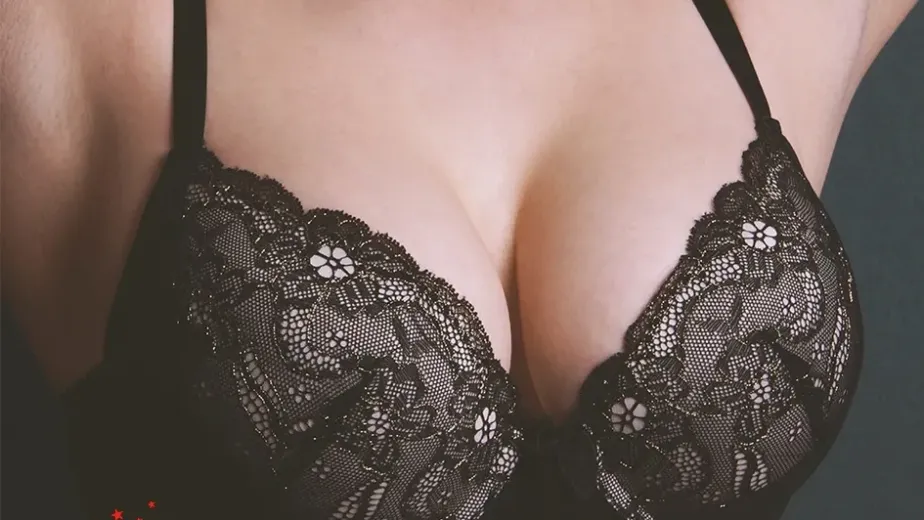

Yes, a breast lift leaves scars, and nobody considering a mastopexy should be told otherwise. To gather sagging tissue and move the breast upward we have to cut skin, and that cut leaves a permanent mark. Where that mark sits, how obvious it stays and how far it fades are largely within our control.
Where do the scars fall in a breast lift?
There is usually a scar around the nipple, and an inverted T shaped scar running downward. We hide the horizontal arm of that T in the crease under the breast, where it disappears from view.
So what you actually see when you look straight on comes down to two things: the circle around the nipple and the vertical line running down from it. We don’t place the incision at random. We plan it where the scar will be least visible.
Is there a difference in scarring with and without an implant?
There isn’t. Whether we lift using your own tissue alone or place an implant in the same operation, the amount of scarring doesn’t change. The position and the shape of the scar are identical, and adding an implant doesn’t add a scar.
Which incision patterns do we use in a breast lift?
There are three plans, and which one you need depends on how much sagging there is:
- Periareolar incision: Made only around the nipple. We use it for mild and moderate sagging, and it leaves the least scarring. The scar sits on the color border of the areola, where it hides.
- Vertical, or lollipop, incision: The circle around the areola plus a vertical line running down from the nipple to the crease under the breast. This is our choice for moderate sagging.
- Inverted T incision: The circle around the areola, the vertical line and the horizontal line in the crease, all together. Where sagging is significant, or where we are combining a lift with a reduction, this gives the most lift.
We decide which incision suits you by seeing your degree of sagging and the structure of your breast at the consultation. We choose the incision according to what your breast needs, not according to how worried you are about scarring.
Do breast lift scars go away with time?
They don’t disappear completely, but they fade markedly. A scar starts as a red, raised line, then turns pink, and over the months settles into a pale, whitish tone. That maturing takes up to a year, and the scar fully settles somewhere between 12 and 18 months.
Which means the scar you see in the mirror right after surgery is far more obvious than the one you will have a year later. Don’t judge the result by what the first few months look like.
How do you care for breast lift scars?
Patients who take scar care seriously get a visibly better result. So we ask a few things of you.
- Once the incisions have fully closed, usually within 2 to 3 weeks, you start using silicone gel or silicone tape. In skin that is prone to raised scars or keloid, this is the single most useful thing you can do.
- A fresh scar that sees sunlight darkens permanently. We want you to use a sunscreen of at least factor 30 or to keep the area covered with clothing.
- Keep the area clean and moisturized. Stay away from heavy lifting and from movements that stretch the scar line in the early weeks.
If a scar thickens or becomes raised, we can add other treatments alongside silicone, such as a cortisone injection or laser.
What makes scars heal badly?
Smoking is at the top of the list. It reduces the blood supply to the tissue, slows the healing of the incision line and makes the scar worse. We ask you to stop before surgery and to stay off it afterward.
Weight fluctuation stretches a scar too. Gaining and losing weight quickly in the months after surgery puts a load on a fresh scar line and can widen it.
Then there is straining the scar line too early. When a healing incision is put under tension, the body produces extra collagen to hold itself together, and the scar can end up raised and wide. That is why we ask you to take the return-to-sport timeline seriously.
Frequently Asked Questions
Do breast lift scars disappear completely?
No, the scar is permanent. With proper care it fades considerably and becomes much less noticeable over time.
Which incision leaves the least scarring in a mastopexy?
The periareolar incision, made around the areola. It is only suitable for mild and moderate sagging, though. We choose the incision by your degree of sagging, not by scar concerns.
When does the scar reach its final appearance?
Maturing takes up to a year, and full settling takes 12 to 18 months.
I’m prone to keloid scars, can I still have a breast lift?
If you have a history of keloid or raised scars, we need to discuss it at the consultation. We adjust your scar care plan accordingly.
Alongside the question of scarring, our articles on breast lift or implants and, for the same question on the face, scarring after rhinoplasty are worth reading too.
Dr. Alper Eskalen talks through scarring after a breast lift with all of these details in mind.