
If you’re researching breast augmentation, sooner or later you’ll run into a term that wasn’t around a few years ago: the Preserve technique. Patients who want a natural result ask me about it almost every week. The logic behind it really is different from classic breast augmentation, and the difference starts with what I don’t cut.
What does the Preserve technique mean in breast augmentation?
Preserve, written Preservé in some places, is a surgical approach built on protecting tissue. The name comes from preservation, from leaving structures intact. It doesn’t come from a brand. During the operation I disturb the muscle, the nerves and the connective tissue as little as possible.
In classic breast augmentation the implant goes either under the muscle, in the submuscular plane, or over it, in the subglandular or subfascial plane. That method has been the standard for many years and it’s still the right choice for plenty of patients. It also carries some known trade-offs. Cutting the muscle means a longer recovery. Some patients feel the implant shift when they move their arms, which we call animation deformity. And pain can be more than expected.
In the Preserve technique the implant doesn’t go under the muscle. It goes into its own tissue plane, subglandular or subfascial. Because the muscle isn’t cut, tissue integrity stays largely intact. The circummammary ligament and the Cooper ligaments that give the breast its shape are left alone as well, and we expect that to mean less sagging and a more stable position over the years.
How is the Preserve technique different from classic breast augmentation?
The difference isn’t only where the implant sits. There are three points where the two really separate.
Recovery: With no cut through the muscle or the breast tissue, patients usually have less pain and a shorter recovery. In the classic method the first days can be demanding. With a tissue-sparing approach, the return to daily life is often quicker.
Movement and appearance: With an implant placed the classic way, some women feel it move slightly during sport or when they raise their arms. When the tissue is left intact that feeling largely goes away, and the breast moves more naturally.
Breast sensation: Because I work further away from the nerves, sensation in and around the nipple is usually better protected. Breastfeeding is a different matter, and I want to be clear about it. There is no difference between the two methods. In classic augmentation and in Preserve alike, the milk glands and the milk ducts stay intact, so neither technique has an advantage there.
How does a Preserve breast augmentation work, step by step?
The overall path is the same as a classic augmentation: consultation and measurement, implant selection, surgery, then follow-up. What changes is the route I take to place the implant and how I handle the tissue on the way. Surgery time depends on the implant and on your anatomy, and it’s usually similar to the classic method.
Mild swelling and a feeling of tightness in the first days are normal. With a tissue-sparing approach these usually settle sooner, though the timing is different for everyone.
Which patients does Preserve breast augmentation suit best?
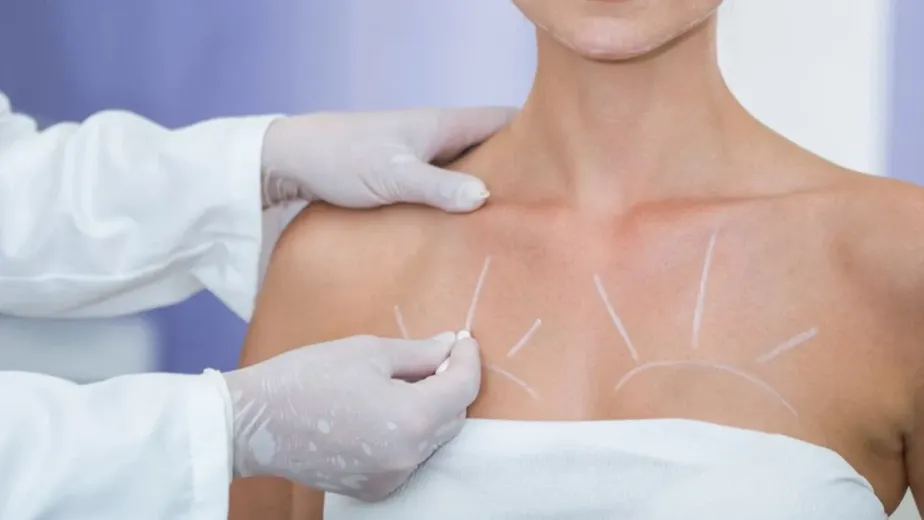
The technique isn’t applied the same way to every patient. We look at the thickness of your breast tissue, your skin elasticity and what you want from the result. In patients whose tissue is thick enough, the method usually gives a good outcome. When the tissue is thin, we may suggest the submuscular plane or a different type of implant.
So before you decide you want this particular technique, your breast tissue needs a proper assessment. Every woman’s anatomy is different, and applying one method to everyone isn’t good surgery.
Is the Preserve technique better than classic breast augmentation?
Used correctly in the right patient, it makes a real difference. Like every surgical technique, it isn’t the only thing that decides the outcome. Surgical experience, implant choice and aftercare all matter at least as much.
No technique guarantees anything by itself. This one improves the result when it fits the patient, and that is all it claims to do.
Frequently Asked Questions
Does the Preserve technique take pain away completely?
No, it doesn’t remove pain. But because there’s no cut through the tissue the way there is in the classic method, patients usually tell us they feel far less pain than they expected.
Can the Preserve technique be used with any type of implant?
No. We only use Ergonomix 2 implants with the Preserve approach, so it isn’t compatible with other implant types.
How long does recovery take with the Preserve technique?
It varies from person to person. Most of our patients go home the same day and are back to normal life within 2 to 3 days. Your pain threshold and other individual factors play a part, but the return to daily life is usually much faster than with the classic method.
Dr. Alper Eskalen weighs all of these details when he assesses patients for breast augmentation with the Preserve technique.