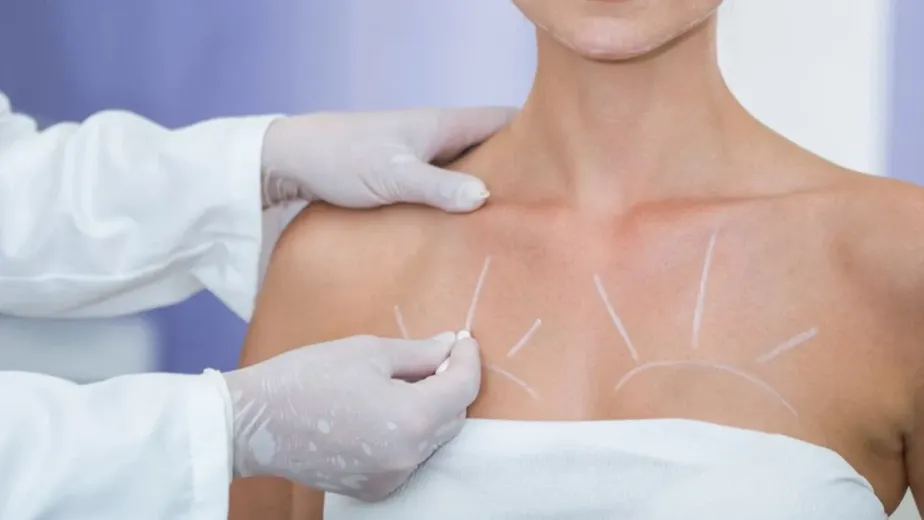

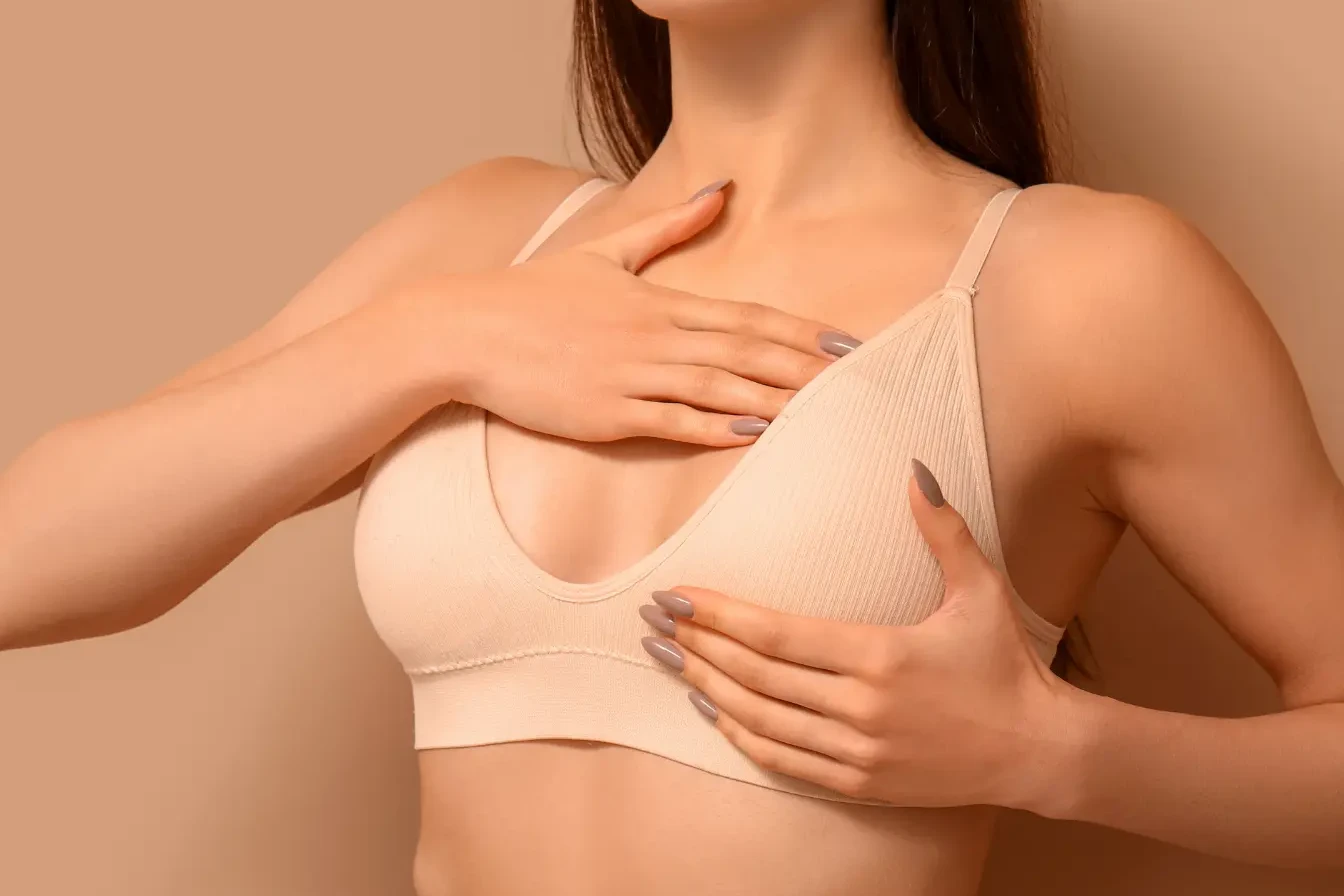
Not every breast can take this technique, and the reasons are physical rather than a matter of preference. So the useful question is who the Preserve technique suits, and who it doesn’t. Wanting it and being right for it are two different things. Suitability comes down to a few concrete things we can see and measure at an examination.
What decides whether the Preserve technique is suitable for you?
When I decide whether the technique can be used in a particular patient, I look at three things. Those are the thickness of the breast tissue, the elasticity of the skin, and the current structure of the breast. Assessed together, those three tell us whether the Preserve technique is right for you.
Which patients get the best result from a Preserve breast augmentation?
In women whose breast tissue is thick enough, the technique usually gives a very good result. When the tissue provides enough cover to hold the implant in its natural plane, the outcome looks and feels natural.
The patients who are happiest with it share four priorities. Natural movement. An early return to daily life. A comfortable operation with little pain. And as little trauma as possible to the connective tissue of the breast. In women who play sport or lead an active life, those priorities tend to be even stronger.
When is the Preserve technique not suitable?
In patients whose breast tissue is very thin, the technique may not give the same result. When there isn’t enough tissue over the implant, the edge of it is more likely to show through the skin. In that situation we usually suggest going back to the classic technique and placing the implant under the muscle.
The technique also can’t be used in women who have already had a breast augmentation. And in patients with a tuberous or tubular breast shape, we generally recommend classic breast augmentation instead.
Why does the consultation matter so much in this decision?
Because the technique is so widely searched online, some patients arrive saying they’ve already made up their minds. The right order is the other way round. First we assess the breast tissue in detail, then we decide together which technique fits you.
Why does the wrong expectation carry a real risk?
“I read about it online, it sounds great, I want it too” is an approach that can set you up for disappointment. If the tissue isn’t suitable and the technique is forced anyway, the result can fall short both aesthetically and functionally. A surgeon’s recommendation has to start from anatomy, not from what the patient has asked for.
How is breast tissue thickness measured at the consultation?
Usually by hand, with a simple pinch test. In some cases we add an ultrasound to see the tissue thickness more clearly. That measurement isn’t enough on its own to make the decision. We read it together with your skin elasticity and the volume of breast tissue you already have.
Body mass index and general skin quality are part of the assessment as well. In women with noticeably loose skin, or with a history of weight changes, tissue support has to be judged differently. That’s why two patients of the same age and weight can walk out with two different recommendations.
Frequently Asked Questions
Can the Preserve technique be used on any breast shape?
No. Suitability depends on the thickness of the breast tissue, the elasticity of the skin and the volume already there.
Is there an ideal tissue thickness for the Preserve technique?
Giving a fixed number wouldn’t be honest, because this is judged individually at the consultation.
What happens if I’m told I’m not suitable for the Preserve technique?
It means we’ll recommend an approach that fits your anatomy better. The goal is a natural, good-looking result, and we choose the technique that gets you there together.
Can the Preserve technique be used if I’ve had breast surgery before?
No. It isn’t suitable for patients who have already had a breast augmentation.
Dr. Alper Eskalen assesses suitability for the Preserve technique separately in every patient, with all of these details in mind.